


Antique Chased Copper Biscuit Box | Silver-Lined |5.5”Circa 1890–1910
Antique Chased Copper Biscuit Box | Silver-Lined |5.5”Circa 1890–1910
Couldn't load pickup availability
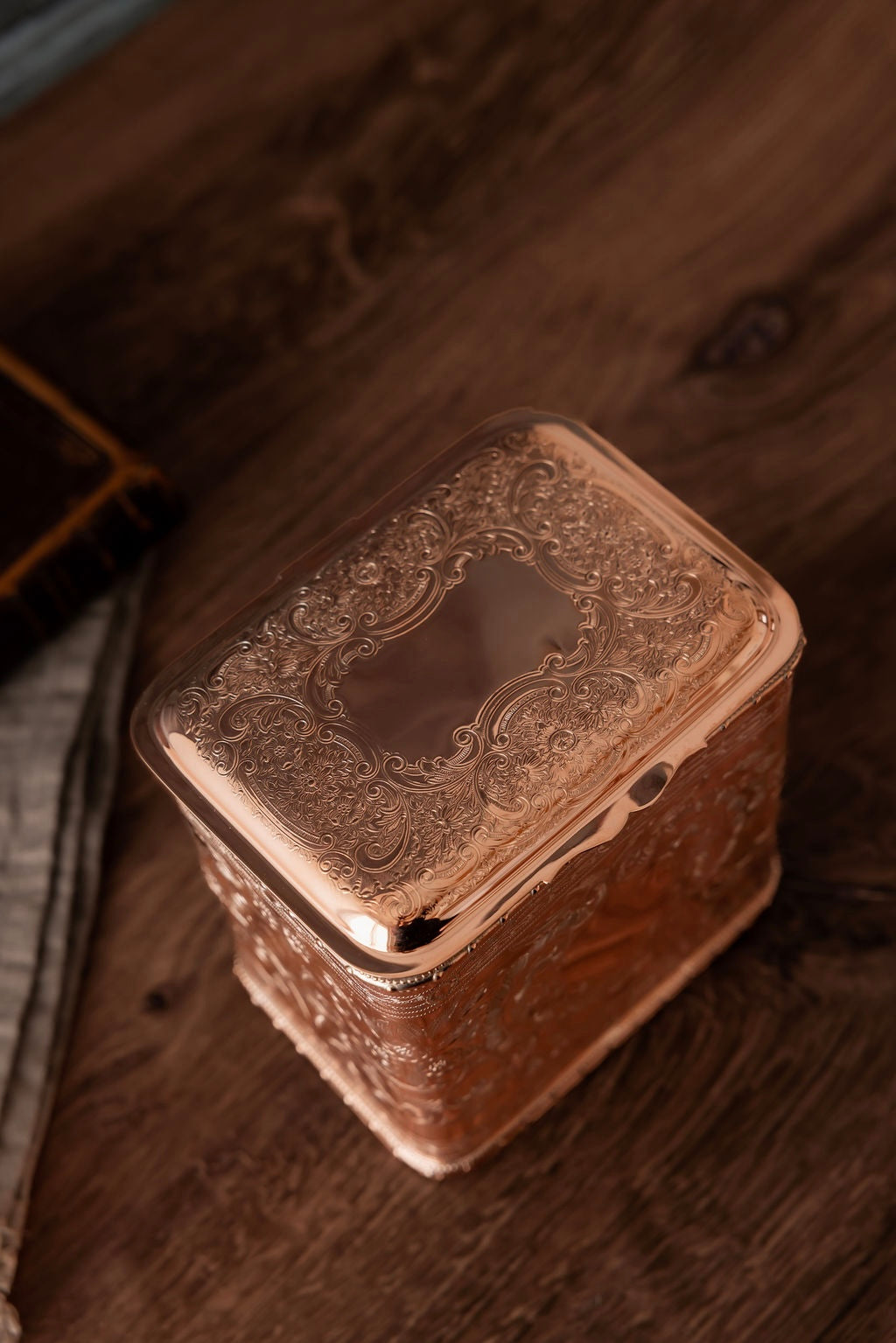
This antique copper biscuit box, dating to the late 19th century (circa 1880–1900), features an exquisitely detailed fully chased design across every panel, showcasing the ornate craftsmanship characteristic of fine Victorian-era tableware. Elaborate scrollwork and floral motifs flow continuously around the body of the box and across the lid, creating a richly textured surface that reflects the artistry of traditional metalwork.
Framing the piece are embossed decorative borders along both the top and bottom edges, adding depth and structure while highlighting the intricate chasing throughout the design.
The interior is lined with pure silver, a traditional finish used in historic serving pieces to protect the copper while making it suitable for storing biscuits, sweets, or small confections. With its hinged lid and substantial presence, this box was originally designed to sit proudly on a tea table or sideboard during formal gatherings.
This piece is also a founder favorite—Coppermill Kitchen founder Beth Ann Luke was especially drawn to the extraordinary craftsmanship and presence of this biscuit box, making it one of her most beloved selections within the collection.
Part of the Coppermill Kitchen Heirloom Collection, this piece was selected for its remarkable craftsmanship and timeless decorative appeal.
Dimensions
Height: 5.5”
Length: 5.5”
Width: 4.75”
Interior :Silver Lined
Care: Hand wash gently with warm water and mild soap if needed, then dry thoroughly. The copper exterior may be lightly polished or allowed to naturally patina over time, while the silver lining can be polished occasionally to maintain its brightness.

Lovingly restored by hand with traditional methods and pure tin interiors, these antiques are brought back to life—ready to be used and treasured again. While we do our best to restore each piece, subtle signs of age and charm may remain as a testament to its history.